
Crans-Montana fire: Italian intervention
The National Civil Protection System assisted citizens and coordinated activities with the Swiss authorities
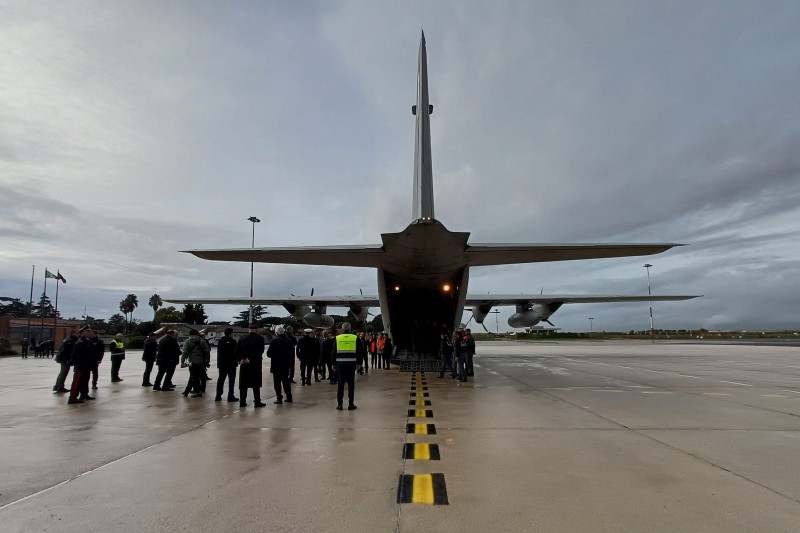
The bodies of five of the six young Italian victims who tragically lost their lives in a nightclub fire in Crans-Montana, Switzerland, on New Year’s Eve arrived in Italy today aboard an Italian Air Force C-130 aircraft. At Milan Linate Airport, the victims’ families werepresent to receive the coffins, along with representatives of local, regional, and national institutions, including Fabio Ciciliano, Head of the Civil Protection Department.The respective regions have coordinated the transfer of the bodies to the victims’ hometowns —Milan, Bologna, and Genoa. The coffin destined for Rome was also transported on the same aircraft and arrived at Ciampino Airport.
Of the 14 Italians injured, 11 have recently been repatriated in an operation coordinated by the Remote Centre for Health Rescue Operations (CROSS). They are currently receiving treatment at Niguarda Hospital in Milan. Two patients have chosen to continue their medical care in Switzerland, while one remains in a clinical condition that does not yet allow transfer to Italy.
With the return of the bodies to our country and the repatriation of the injured, Italy's intervention in Switzerland is coming to a close. The tragic incident in Crans-Montana, which involved many of our fellow citizens, necessitated the immediate activation of the National Civil Protection System. This was essential to provide timely assistance to all individuals affected, both Italian and foreign, and to ensure proper coordination of efforts with the Swiss authorities.
In the immediate aftermath of the disaster, a helicopter from the Civil Protection of the Aosta Valley Region was deployed, carrying medical staff and technicians from the Aosta Valley Mountain Rescue Service as part of established cross-border cooperation mechanisms. Following a formal request for assistance from the Swiss Confederation through the Union Civil Protection Mechanism (UCPM), the National Civil Protection Service was promptly mobilized.
Italy’s intervention proved particularly complex and involved a wide range of coordinated activities managed by a dedicated team from the Civil Protection Department. Their efforts focused on providing technical and operational support through specialized teams from the Piedmont Region. The intervention also included assistance in identifying victims, led by doctors from the State Police, and evaluating the clinical conditions of the injured, managed by a team of healthcare professionals from the Lombardy Region, which included doctors, nurses, and psychologists. Additionally, several civil protection volunteers were deployed to provide psychological support to the young victims affected by the accident, their families, and the emergency personnel engaged at the scene in recent days.