
Forest Fire Campaign 2026
The campaign starts on June 15 and ends on October 15
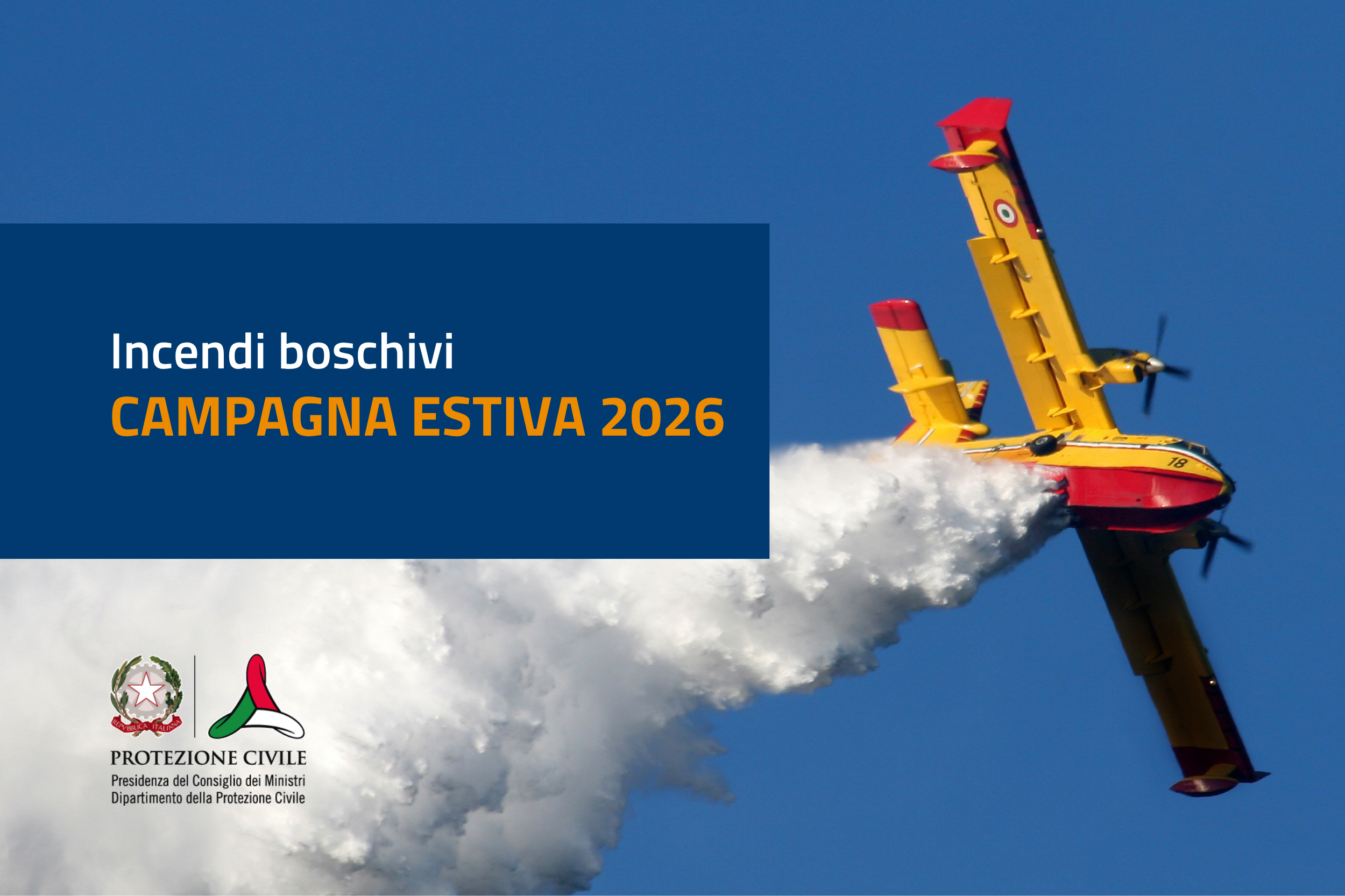
On the occasion of the launch of the 2026 Forest Fire Prevention Campaign, the Minister for Civil Protection and Maritime Policy, Nello Musumeci, has issued to the Regions, the Autonomous Provinces, and the relevant ministers the customary document outlining the schedule for active forest firefighting activities during the summer, along with recommendations for more effective measures to combat forest fires and fires in urban–rural interface areas. The document also addresses related risks to ensure the adoption of all necessary measures to prevent and manage this phenomenon effectively.
The document defines the tasks, responsibilities, and initiatives that the various agencies and administrative entities must undertake to ensure effective action and proper coordination among the relevant forces.
The Civil Protection Department, which coordinates the State’s aerial firefighting fleet through the Joint Air Operations Centre (COAU), also issues operational procedures to the Regions and Autonomous Provinces for requesting air support to reinforce regional response capacities.
In view of the 2026 Forest Fire Campaign, the Minister for Civil Protection and Maritime Policies has set the campaign period from June 15 to October 15, 2026, urging all relevant administrations and entities to strengthen their prevention, planning, and operational response efforts.
The document emphasizes that the phenomenon of forest fires is becoming increasingly significant at the European level, also due to the effects of climate change, the growing frequency of drought periods, and the rise in heatwaves. Within this context, the document underscores the need to adopt an integrated approach based on the complementarity of prevention, risk mitigation, and active firefighting, ensuring the coordinated involvement of all institutional and local stakeholders.
Particular emphasis is placed on prevention, considered the primary means of reducing forest fires and fires in the urban–rural interface. The recommendations call for strengthened information sharing among regional, national, and civil protection agencies; the systematic use of forecast data and fire danger bulletins; the promotion of public awareness campaigns; and the involvement of specialized associations, particularly those active in the agricultural and forestry sectors. The document also highlights the importance of landscape management, the reduction of vegetative fuel, and the protection of cultural and landscape heritage exposed to fire risk.
About planning, the Regions and Autonomous Provinces are required to update their forest fire prevention plans annually, integrating them with specific procedures for managing fires in interface areas and ensuring coordination with civil protection plans and those about parks and protected areas. Similar measures are required of municipalities, which are expected to update their municipal civil protection plans and implement specific measures for settlements, infrastructure, and tourist facilities at risk.
The recommendations also underscore the need to strengthen the operational capacity of the forest firefighting system. In particular, they highlight the importance of ensuring adequate ground and aerial resources, the qualified presence of Firefighting Operations Directors (DOS), continuous personnel training, and the full operational readiness of the Permanent Unified Operations Centres (SOUP), while promoting coordination among Regions, the Italian National Fire and Rescue Service, volunteer organizations, and other operational units. The report also stresses the importance of national coordination through the Joint Air Operations Centre (COAU), streamlining procedures for requesting State aircraft, and strengthening support infrastructure, such as water supply points, landing zones, and logistical bases.
Finally, the recommendations encourage cooperation and twinning agreements between Regions and Autonomous Provinces to foster the sharing of resources, expertise, and experience.
Overall, the document aims to enhance the resilience of the national forest fire prevention system through greater integration of prevention, planning, and operational capacity, as well as the active involvement of institutions, volunteer organizations, and citizens.
The assets of the State air fleet are coordinated through the COAU—the Joint Air Operations Centre of the Civil Protection Department. The deployment of the fleet is determined by a range of factors, including climatological and meteorological forecasts, the national forest fire danger bulletin, statistical data, the location and capacity of regional fleets, and the availability of water sources. It may also be adjusted in response to specific critical situations.
During the peak period, the air fleet will be deployed throughout the country, specifically at the following bases: Genova, Casarsa della Delizia (PN), L’Aquila, Viterbo, Rieti, Rome-Urbe, Ciampino, Napoli-Capodichino, Lamezia Terme, Reggio Calabria, Catania, Sigonella, Trapani, Cagliari, Decimomannu, and Olbia.
First responders in the event of a fire are ground teams coordinated by the Regions. If the fire is too extensive and ground resources are insufficient, the Firefighting Operations Director (DOS) may request the deployment of regional aerial assets, particularly helicopters. If these resources are also insufficient, the Region, through the SOUPs and/or Regional Operations Centres, requests the intervention of the State air fleet via the Joint Air Operations Centre (COAU). The request for aerial support is made in accordance with specific procedures established by the Department.
Each year, the Regions and Autonomous Provinces update their Forest Fire Prevention Plans (AIB), including provisions on the organization of forecasting, prevention, and firefighting activities, to optimize regional operational capacity, including through collaboration with State administrations.
Particular attention is also given to international operations. The significant forest fires recorded in recent years, particularly in Mediterranean countries, have required the deployment of the State air fleet beyond national borders. This has been made possible through mutual assistance mechanisms established within Europe and through bilateral agreements.
For the 2026 Forest Fire Campaign, the state's air fleet during the peak period from July 1 to September 5, 2026, includes 15 CL415 Canadair aircraft and 4 Erickson S64F helicopters.
In highly critical situations, aircraft co-funded by the European Commission under the "rescEU" project may also be deployed within the country. In addition, the Canadair CL-415 and Erickson S-64F fleet will be reinforced throughout the Forest Fire Campaign period (15 June–15 October) by an additional nine helicopters provided by the Ministry of Defence and Carabinieri.